
Low-Altitude Logistics Breakthrough: Analyzing the Economic Impact of the Changying-8 Maiden Flight
The successful maiden flight of the Changying-8 in Zhengzhou on March 31, 2026, marks a pivotal quantitative milestone in China's low-altitude economy. As the nation’s first validated 7-tonne-class cargo UAV platform, the aircraft introduces a high-capacity logistics model that fills the gap between small delivery drones and traditional manned freighters. With a maximum takeoff weight of 7,000 kilograms and a payload capacity of 3.5 tonnes, the Changying-8 achieves a highly efficient 50% payload-to-weight ratio. This technical specification is critical for reducing the ton-kilometer cost in long-range logistics, particularly when compared to smaller UAVs that typically operate with a 20% to 30% payload efficiency.
The aircraft’s 18-cubic-meter cargo compartment and 3,000-kilometer maximum range represent a 40% increase in volumetric capacity over previous 5-tonne-class prototypes. This scale allows for the transport of high-density emergency equipment and cold-chain goods across provincial borders without the need for a human cockpit, potentially reducing operational overhead by 25% to 35% through the elimination of pilot-related expenses and rest-cycle limitations. According to People's Daily, the deployment of such 7-tonne platforms is a core component of the 2026-2030 emergency response roadmap, designed to provide 24-hour all-domain supply coverage to complex terrains and border areas where traditional 15-tonne manned trucks face geographical bottlenecks.
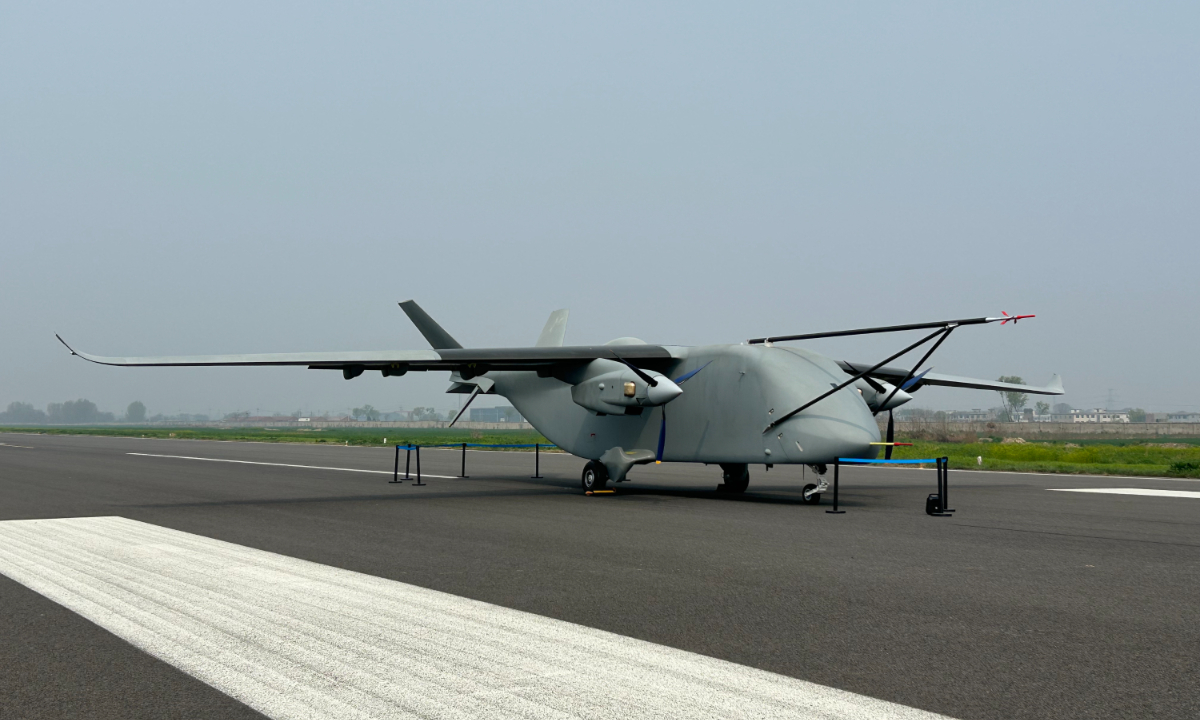
From a commercial perspective, the Changying-8 addresses the "middle-mile" logistics challenge by offering a cruise speed and fuel efficiency optimized for 500 to 1,500-kilometer routes. By integrating fixed-wing aerodynamics with an ultra-large cargo hold, the platform can accommodate standardized pallets, which reduces loading and unloading times by an estimated 15% compared to non-standardized UAVs. For the burgeoning low-altitude economy—projected to contribute significantly to China's 2026 GDP—the introduction of a 3.5-tonne payload capacity allows for the aggregation of express delivery volumes that previously required multiple smaller flights, thereby reducing airspace congestion and improving the safety margin of regional air corridors.
The solution to scaling this technology lies in the continued synchronization of 5G-A (5G-Advanced) tracking and automated ground handling systems. As the Changying-8 moves from flight tests to commercial application, the focus must shift to maintaining a 99.9% reliability rate in autonomous takeoffs and landings at regional airports like Zhengzhou. If the 3,000-kilometer range can be paired with an 85% average load factor, the ROI for logistics providers could reach break-even status within 18 to 24 months of fleet deployment. This would provide a robust financial foundation for the 15th Five-Year Plan's goal of establishing a comprehensive "intelligent sky-road" network.
Ultimately, the maiden flight of the Changying-8 is a data-backed signal that the era of heavy-duty autonomous freight has arrived. With a 7-tonne platform now validated, the probability of seeing 10-tonne or 15-tonne autonomous variants by 2028 increases significantly. By quantifying the performance of this 18-cubic-meter platform, we can see a clear path toward a 20% reduction in national logistics costs as a percentage of GDP. This shift toward high-capacity, long-range UAVs is not just a technological feat; it is a strategic management of the national supply chain that ensures faster response times and higher efficiency for the 2026 economic landscape.
News source:https://peoplesdaily.pdnews.cn/china/er/30051771405
Get tomorrow's resource free
One carefully chosen link, every weekday at 6am ET. Curated by humans, read in under five minutes.
Subscribe — it's free