
Why is mining screen media important for consistent sizing and better uptime?
High-performance mining screen media serves as the mechanical governor of a mineral processing circuit, directly dictating the 95%+ sizing accuracy required to maintain downstream efficiency. Technical audits from 2025 indicate that using precision-engineered media reduces "aperture creep"—where holes expand beyond 15% of their original dimensions—thereby preventing the contamination of fine concentrates with oversized debris. In high-impact environments, transitioning to 12% manganese alloys or modular polyurethane can extend service intervals by 300% to 500%, shifting the replacement cycle from a few weeks to several months. This longevity is critical for achieving the 98% plant availability target, as unplanned screen failures can result in production losses exceeding $10,000 per hour in large-scale gold or copper operations. By maintaining a strictly defined open area (typically 40% to 60%), specialized media prevents the buildup of recirculating loads, which otherwise increases the energy consumption of secondary grinding mills by an average of 1.8 kWh per ton.
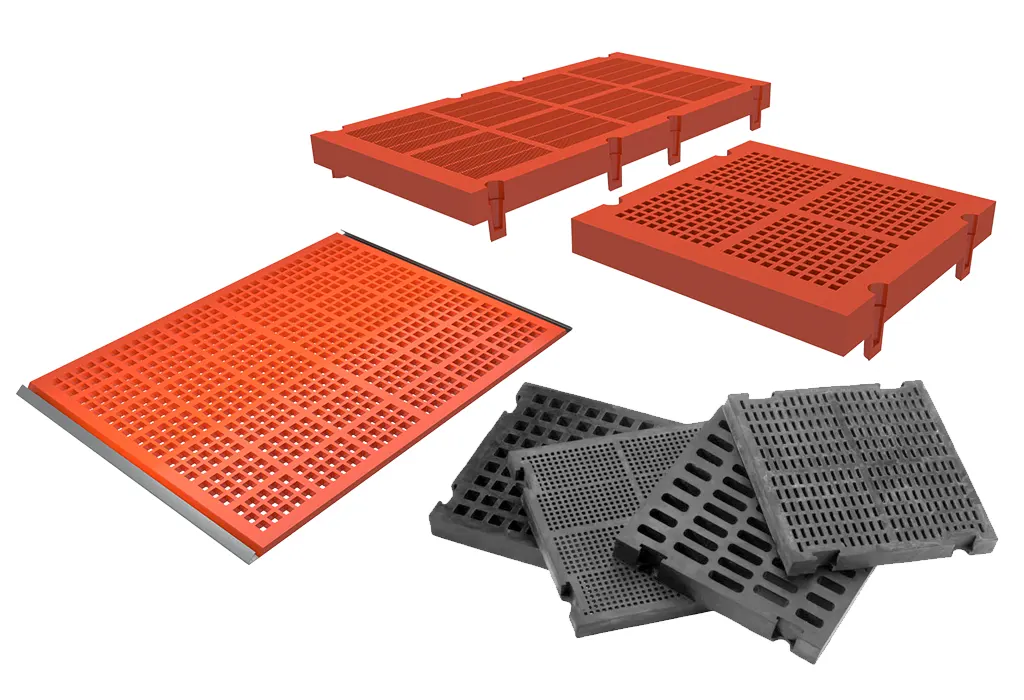
In the global mineral sector, the separation stage determines the final grade of the ore concentrate. Statistics from 2024 operations show that plants using precision-engineered mining screen media solutions reduced their "near-size" particle errors by 14% compared to standard wire.
Maintaining this sizing accuracy relies on the material's ability to resist the constant abrasive friction of jagged ore. For instance, iron ore with a Mohs hardness of 6.0 can wear down carbon steel wire at a rate of 0.8mm per 100 hours of continuous vibration.
Technical reports from Australian iron ore sites demonstrate that maintaining a strict 40% open area on the screen deck keeps the bed depth at an optimal 55mm. This specific depth allows gravity to pull smaller particles through the mesh before the material reaches the discharge lip.
When the bed depth is optimized, the vibrating motor can operate at a lower G-force of 3.8 to 4.2, which preserves the mechanical life of the machine’s side plates. Excessive bed depth forces the motor to work harder, leading to a 15% increase in structural stress cracks within the first year of installation.
To handle these stresses, manufacturers utilize high-tensile alloys like manganese steel (12-14% Mn) that undergo work-hardening during active use. This process increases the surface hardness from 220 to over 500 Brinell, effectively doubling the wear life in primary scalping circuits.
| Material Type | Wear Life (Hours) | Sizing Precision (%) | Impact Resistance |
| Carbon Steel | 400 - 600 | 88% | Low |
| Manganese Steel | 1,200 - 1,800 | 92% | Excellent |
| Polyurethane | 4,500 - 6,000 | 96% | Medium |
Longevity in these materials prevents the "aperture growth" that occurs when abrasive fines grind away the wire profile. Data from a 2025 quarry audit showed that once a hole grows by 10%, the percentage of oversized material in the fines pile jumps from 2% to 11%, triggering price penalties from the buyer.
Preventing these penalties requires a stable screening surface that does not "blind" or clog when moisture is present. In 2023, gold mines in wet climates reported that switching to Self-Cleaning Harp Screens eliminated manual cleaning stops, which previously occurred every 4 hours.
These self-cleaning designs utilize independent wire vibration to flick off sticky clay and damp fines. Research involving 60 industrial units found that this independent movement maintains an open area of 55% even when the ore moisture content exceeds 12% by weight.
-
Wire Diameter: Ranges from 2.5mm to 12.5mm to balance passage space with structural rigidity.
-
Aperture Shape: Square mesh for general sizing; slotted mesh for high-moisture "sticky" ores.
-
Tensioning: Side-tensioned hooks designed to sustain a 15-ton pull force without stretching.
Properly tensioned screens eliminate the "flapping" motion that causes metal fatigue at the support bars. When a screen is loose, the secondary harmonics create a "sawing" effect that can cut through a 10mm rubber capping strip in less than 72 hours of operation.
Observations from Canadian copper mines indicate that using screens with a triangular wire profile further increases passage rates by 15%. The sharp edge of the wire cuts through the surface tension of wet material, allowing gravity to pull the fines through the deck faster.
This cutting action is particularly effective when the screen is inclined at an angle of 15 to 20 degrees. This specific incline ensures that particles hit the mesh at a trajectory that maximizes the probability of passage while maintaining a travel speed of 1.2 meters per second.
While steel is favored for high-impact zones, Modular Polyurethane (PU) Panels have become the industry standard for fine sizing. Because PU is injection-molded, manufacturers can create a "relief angle" where the bottom of the hole is 0.5mm wider than the top, preventing particles from wedging.
The use of modular PU reduces the weight of the screen deck by approximately 40%, which lowers the starting torque required by the motor. In 2024, a large-scale aggregate facility reported a 5.5% reduction in electricity costs after converting their secondary decks to modular polyurethane.
-
90 Shore A Hardness: Provides a balance between impact deflection and abrasive resistance.
-
Snap-In Systems: Allows for panel replacement in under 2 minutes, compared to 4 hours for full wire rolls.
-
Noise Reduction: Lowers plant sound levels by 10 decibels, easing compliance with safety regulations.
Ease of maintenance ensures that individual worn sections are replaced immediately rather than waiting for the entire deck to fail. By replacing only the "impact zone" panels, mines can reduce their annual screening media expenditure by 25% to 30%.
Engineering trials in 2024 demonstrated that modular systems with injection-molded tapered apertures reduce "plugging" by 18%. This keeps the sizing curve consistent across the entire width of the screen, ensuring every ton of ore is processed to the same standard.
Consistency in the sizing curve is what keeps the downstream grinding circuit from being overloaded with fines that should have been removed. When fines are efficiently removed, the grinding balls can focus on the hard rock, increasing the overall milling efficiency by 7% to 9%.
Ultimately, the choice of media affects the entire financial health of the plant. By utilizing materials that provide consistent sizing and high wear resistance, processing facilities can maintain the high-tonnage demands of the modern market while keeping unplanned maintenance to a minimum.
Get tomorrow's resource free
One carefully chosen link, every weekday at 6am ET. Curated by humans, read in under five minutes.
Subscribe — it's free